Why Chess Might Be the Best Toy for Your Child's Imagination
Most parents think chess is only about logic and rules. But decades of classroom studies show something surprising — chess also helps children think in more creative, original ways.
- chess
- creativity
- kids education
- imagination
- online chess classes
- child development
- primechess
Why Chess Might Be the Best Toy for Your Child's Imagination
When most parents picture a chess player, they imagine someone very serious, sitting still, following strict rules. Logical. Rigid. Not exactly "creative."
But here's a surprise: chess might actually be one of the best ways to grow a child's imagination.
That sounds strange at first. Chess has fixed rules. A knight always moves in an L-shape. A bishop only moves diagonally. There's nothing to "make up." So how can a game with such strict rules make kids more creative?
The answer lies in what happens inside a child's head every time they sit down at the board.
A Board Game That Asks "What If?"
Every chess move starts with a question: "What if I move here? What if my opponent does that? What happens next?"
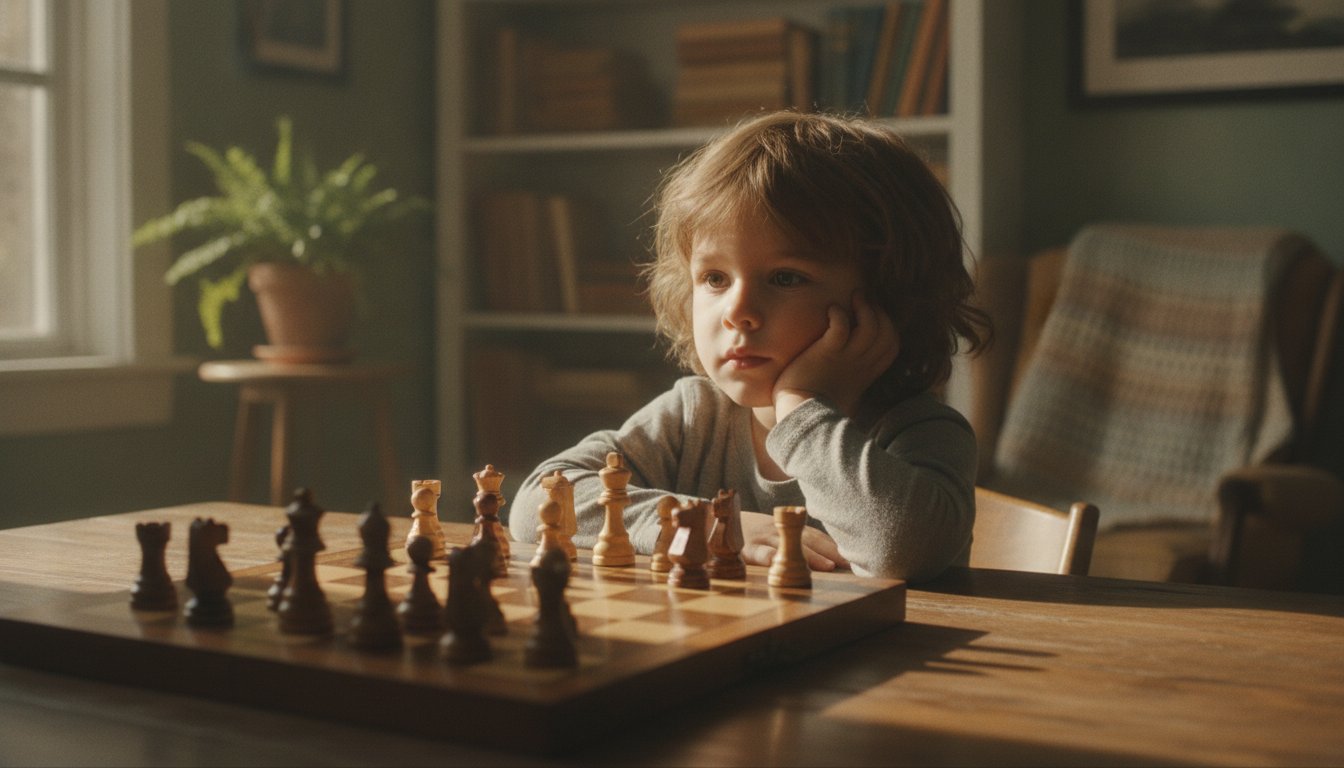
A child playing chess is not just following rules. They are constantly imagining positions that don't exist yet. They picture pieces moving two, three, even five steps into the future — positions that are only in their mind, not on the board in front of them.
This kind of mental picture-making is exactly what psychologists call imaginative or creative thinking. It's the same mental muscle a child uses when they invent a story, build an imaginary world, or draw something that has never existed before.
Chess simply gives that muscle a daily workout, disguised as a game.
What Older Research Discovered
This idea isn't new. Long before chess apps and online classes existed, researchers were already curious about this question.
In the 1970s, a Belgian researcher named Johan Christiaen studied primary school children who were taught chess over one school year. He compared them to children who did not learn chess. The children who learned chess showed faster gains in their thinking skills compared to the group that didn't play — a finding that helped spark decades of further research into chess and children's cognitive growth around the world.
Later, researchers in New Brunswick, Canada ran a much larger, multi-year chess program in schools during the late 1970s and early 1980s. They tested children using a well-known creativity test, one that measures how many original, unusual, and flexible ideas a child can come up with. Children who had been learning chess scored notably better on measures of original thinking than children who had not — suggesting the game was doing more than teaching them how to win a board game. It was training their imagination.
Neither of these studies is brand new. But that's actually the point — the idea that chess helps creativity isn't a passing trend. It's something researchers have kept noticing for over 40 years, across different countries and different age groups.
Why This Happens
Here's the simple explanation. Chess forces a child to hold multiple imaginary versions of the same board in their head at once.
"If I move my rook here… my opponent might respond with this… but then I could do that instead…"
That's not memorization. That's imagination combined with logic — picturing something that isn't real yet, testing it out in your mind, and then choosing the best version of it.
Do this hundreds of times over months of playing, and a child's brain gets very comfortable jumping between different "what if" scenarios. That comfort doesn't stay locked inside the chessboard. Many parents and teachers notice it showing up elsewhere — in the way a child writes a school essay with a more original idea, solves a science project problem in an unexpected way, or comes up with a creative solution during a group project.
Quiet Kids Often Surprise Everyone
There's another beautiful side effect chess coaches often notice, especially with quieter or shyer children.
Some kids don't like speaking up in a group. They feel nervous sharing an idea out loud in a classroom of 30 students. But at a chessboard, a child doesn't need to speak to express an idea. Every move is a way of "saying" something — a bold plan, a clever trick, a surprising twist.
Coaches often see shy children become surprisingly expressive over the board, trying unusual moves and unexpected strategies they'd never suggest out loud in a classroom. Chess gives them a quiet, safe way to be bold and imaginative, one move at a time.
Not Just for "Chess Kids"
Parents sometimes worry that chess is only useful for children who want to become serious competitive players. But the research above wasn't about training future champions. It was about ordinary schoolchildren, in ordinary classrooms, learning chess as one part of their week.
The creative thinking benefits showed up in regular children — not just prodigies. That's an important reminder for parents: your child doesn't need to be the "next chess star" to benefit. They just need the chance to sit down, think a few moves ahead, and imagine possibilities that aren't there yet.
Give Your Child That Chance
Every chess game is really a small workshop for imagination. Two players sitting across from each other, quietly asking "what if," again and again, until a creative idea turns into a winning plan.
That kind of thinking — imaginative, flexible, willing to try the unexpected — is exactly what children need far beyond the chessboard: in school projects, in science fairs, in art class, and later, in life.
At PrimeChess.org, our online classes are designed for children aged 6 to 13, guiding them step by step from their very first moves to confident, creative play — with real coaches who know how to bring out a child's imaginative side, not just their memory of the rules.
Give your child a fun new way to imagine, question, and create. One move at a time.
PrimeChess Courses
Keep learning with PrimeChess
Stuck at chess and not seeing progress? The Beginner Course helps players build reliable tactics, opening habits, and endgame confidence so rating plateaus become easier to break.